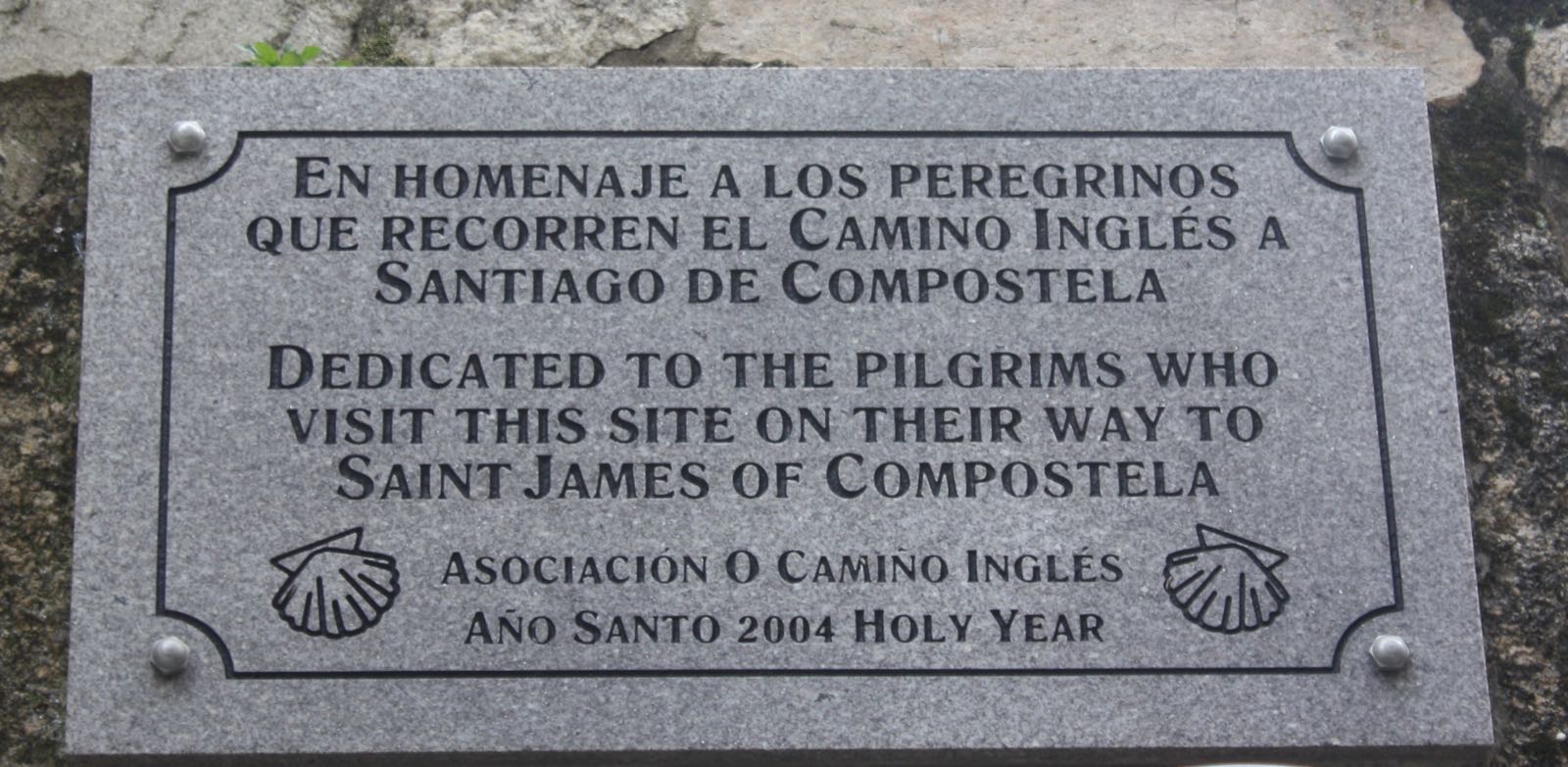
Trek Overview
Location
Terrain and Conditions
The Camino Inglés passes through Paved, Dirt Path, Coastal terrain. Climate conditions include Atlantic, Wet, Mild. The route stays below significant altitude risk, reaching a maximum of 450m.
Permits and Logistics
Check the current local access and accommodation requirements for your dates before you go, for example with the hut, hostel or route organisation you plan to use. Porters are not typically available on this route — you carry your own gear.
Use the Trekax Pack Calculator to compare your packed and worn gear weights for the Camino Inglés using the light packing profile at 8% of body weight.
Is this trek right for you?
The English Way ends at Santiago and has two Galician starting points. The Xunta de Galicia measures the route from Ferrol at 112.4 km, rated Medium, and the route from A Coruña at 72.8 km. The two meet at Bruma. Only the Ferrol start is above the 100 km minimum for the Compostela, so start there if you want to qualify. Source note: the Xunta pages cover only these Galician routes. This is a general guide, not an assessment of your fitness.
Before you go
- Choose your start: the Xunta lists 112.4 km from Ferrol and 72.8 km from A Coruña, and the two routes converge at Bruma.
- The Pilgrim's Reception Office requires at least 100 continuous km on the same route for the Compostela, so a walk from A Coruña alone falls short of the minimum.
- The credencial gives access to the pilgrim hostels and is your proof for the Compostela. If you walk only the minimum distance, get it stamped, with the date, at the start and end of each stage.
- The Xunta lists a sleeping bag among the basics and advises planning stages to suit your physical capacity. The Pilgrim's Reception Office in Santiago is open every day from 9:00 to 19:00 and closed on 25 December and 1 January; at busy times it cannot guarantee same-day collection of the Compostela.
Sources checked 2026-10-16: Xunta de Galicia: English Way, Pilgrim's Reception Office: the Compostela, Pilgrim's Reception Office: the credencial, Xunta de Galicia: Get ready.
Priority Gear for the Camino Inglés
Based on the terrain, climate, accommodation type, and altitude profile, these are the most important gear decisions for this route:
What Not to Bring
- Camping stove and cookware
- Food supplies beyond snacks
- Crampons or ice axe
- Technical climbing harness or ropes
- Stiff mountaineering boots (overkill for the terrain)
Packing for the Camino Inglés
Complete gear checklist for this 120 km, 6–8 days, Easy route. Best months: Apr, May, Jun, Jul, Aug, Sep. Packing profile: Light (8% of body weight target).
Before you start buying: use the Trekax Pack Calculator to explore a total carried-gear target, including worn items. The Camino Inglés uses the 8% packing profile as a planning guide.
🥾 Footwear
🎒 Pack & Carry
🧥 Clothing
😴 Sleep System
💊 Health & Safety
📱 Tech & Documents
Compare your total carried gear weight, including worn items, with a packing-profile target and a category-by-category weight budget.
Try the Trekax Pack Calculator →Also Useful
Frequently Asked Questions
How long does the Camino Inglés take?
The Camino Inglés typically takes 6–8 days to complete, covering 120 km with 3,000m of elevation gain.
Is a permit required for the Camino Inglés?
Check the current local access and accommodation requirements for your dates before you go, for example with the hut, hostel or route organisation you plan to use. This page does not state whether a permit is required or not.
When is the best time to trek the Camino Inglés?
The best months for the Camino Inglés are Apr, May, Jun, Jul, Aug, Sep, during the Spring, Summer, Autumn season window.
Do I need a guide for the Camino Inglés?
A guide is not mandatory for the Camino Inglés, though you should be comfortable with independent route-finding.
What is the altitude risk on the Camino Inglés?
The Camino Inglés stays below significant altitude risk, reaching a maximum of 450m.
Are porters available on the Camino Inglés?
Porters are not typically available on the Camino Inglés — you carry your own gear.