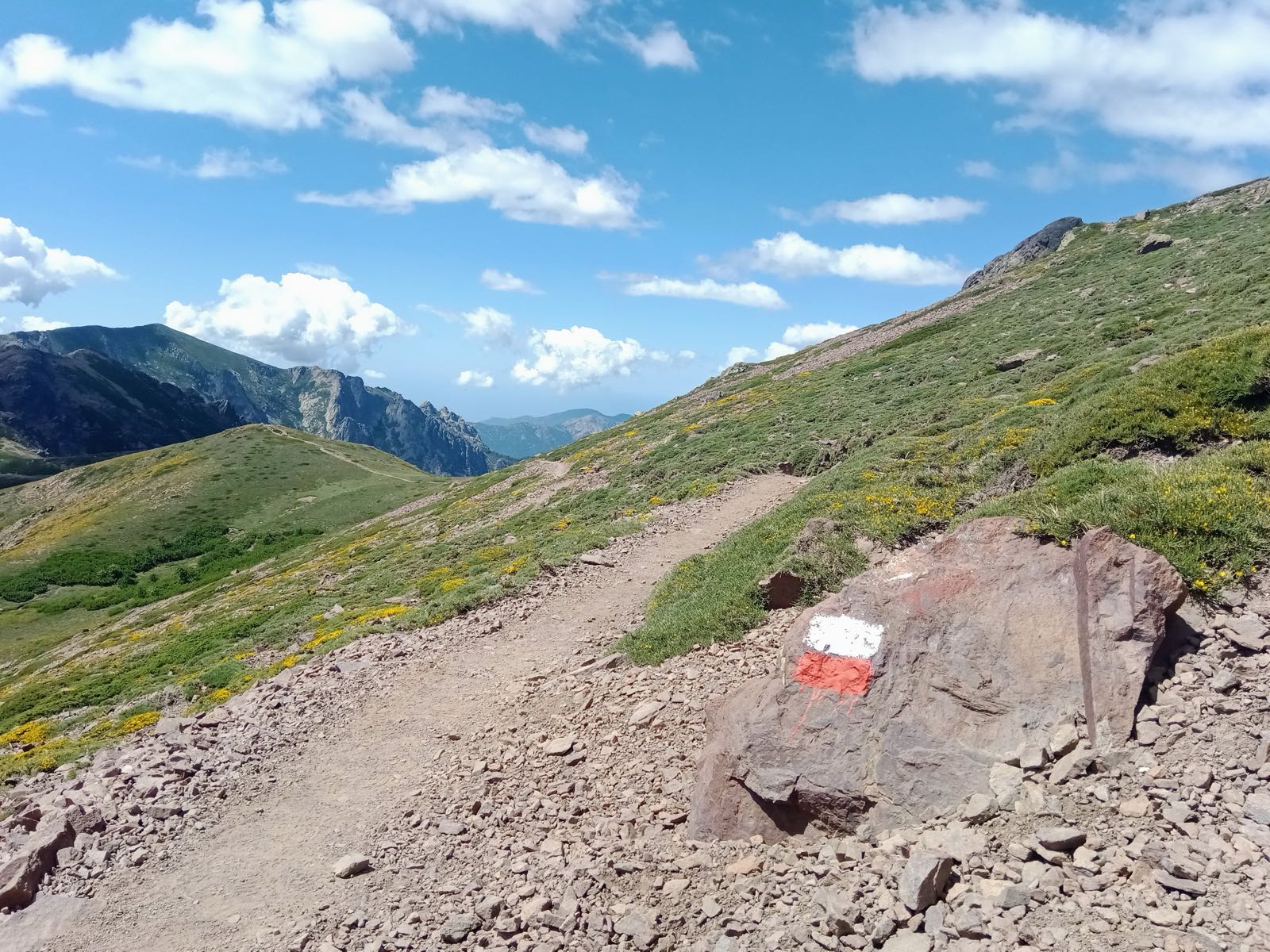
The GR20 passes through Rocky, Mountain, Scrambling terrain. Climate conditions include Mediterranean Mountain, Hot Summer, Cold Nights. The route stays below significant altitude risk, reaching a maximum of 2,607m.
Permits and Logistics
The sources we read describe a mandatory reservation for overnight stays, including bivouac, rather than a separate hiking permit; wild camping is strictly forbidden. Porters are not typically available on this route — you carry your own gear.
Use the Trekax Pack Calculator to compare your packed and worn gear weights for the GR20 using the light packing profile at 8% of body weight.
Is this trek right for you?
The Parc naturel régional de Corse booking platform's stage descriptions treat Vizzavona (end of stage 9) as the end of the northern part of the GR20, with the southern part starting at stage 10, which gives you a natural point for a shorter section. The refuges are guarded from June to September, and outside that period the route is not advised because of snow and, after September, fewer springs. This is a general guide, not an assessment of your fitness.
Before you go
Reservation is mandatory for all formulas, including bivouac. It is made online through the Parc naturel régional de Corse booking platform, with a quota per refuge, and all wild camping remains strictly forbidden.
Plan for June to September, when the refuges are guarded. FFRandonnée says the route is not advised outside that period because of snow and fewer springs after September.
Stage 4 follows the diversion adopted after the 2015 closure, which is now the official route. Follow it rather than the old line.
Plan water: the booking platform's stage descriptions list no water on stages 2 and 3 and a water shortage on stage 12 in July and August.
Based on the terrain, climate, accommodation type, and altitude profile, these are the most important gear decisions for this route:
Waterproof Hiking Boots Essential
Technical terrain requires ankle support and grip
Lightweight Rain Jacket Essential
For unexpected weather changes
Fleece + Down Mid Layer Recommended
Temperature drops significantly at night
Sleeping Bag -5°C to -10°C Comfort Check with your hut
Self-supported camping requires warm sleep system
Blister Kit (Compeed + Leukotape) Recommended
Long daily distances make blister prevention critical
Trekking Poles Optional
Reduce knee stress on long descents
Extra water capacity Depends on conditions
Stages 2 and 3 have no water and stage 12 has a water shortage in July and August, according to the booking platform's stage descriptions.
What Not to Bring
Crampons or ice axe
Heavy down jacket (fleece sufficient in warm zones)
Packing for the GR20
Complete gear checklist for this 180 km, 14–16 days, Very Demanding route. Best months: Jun, Jul, Sep. Packing profile: Light (8% of body weight target).
📋 About This Packing List
This list is generated from the GR20's terrain profile (Rocky, Mountain, Scrambling), climate (Mediterranean Mountain, Hot Summer, Cold Nights), and accommodation type (Hut, Camping). It reflects the light packing profile — appropriate for this route's conditions. Product options are listed for every category. Check the retailer for current prices and availability.
Before you start buying: use the Trekax Pack Calculator to explore a total carried-gear target, including worn items. The GR20 uses the 8% packing profile as a planning guide.
🥾 Footwear
Item
Product Option
Alternative / Notes
Waterproof hiking boots with ankle support and stiff sole
The GR20 typically takes 14–16 days to complete, covering 180 km with 13,000m of elevation gain.
Is a permit required for the GR20?
The sources we read describe a mandatory overnight reservation for the GR20 (refuges and bivouac), not a separate hiking permit. It is made online through the Parc naturel régional de Corse booking platform, with a quota per refuge, and all wild camping remains strictly forbidden.
When is the best time to trek the GR20?
The best months for the GR20 are Jun, Jul, Sep, during the Summer season window.
Do I need a guide for the GR20?
A guide is not mandatory for the GR20, though you should be comfortable with independent route-finding.
What is the altitude risk on the GR20?
The GR20 stays below significant altitude risk, reaching a maximum of 2,607m.
Are porters available on the GR20?
Porters are not typically available on the GR20 — you carry your own gear.