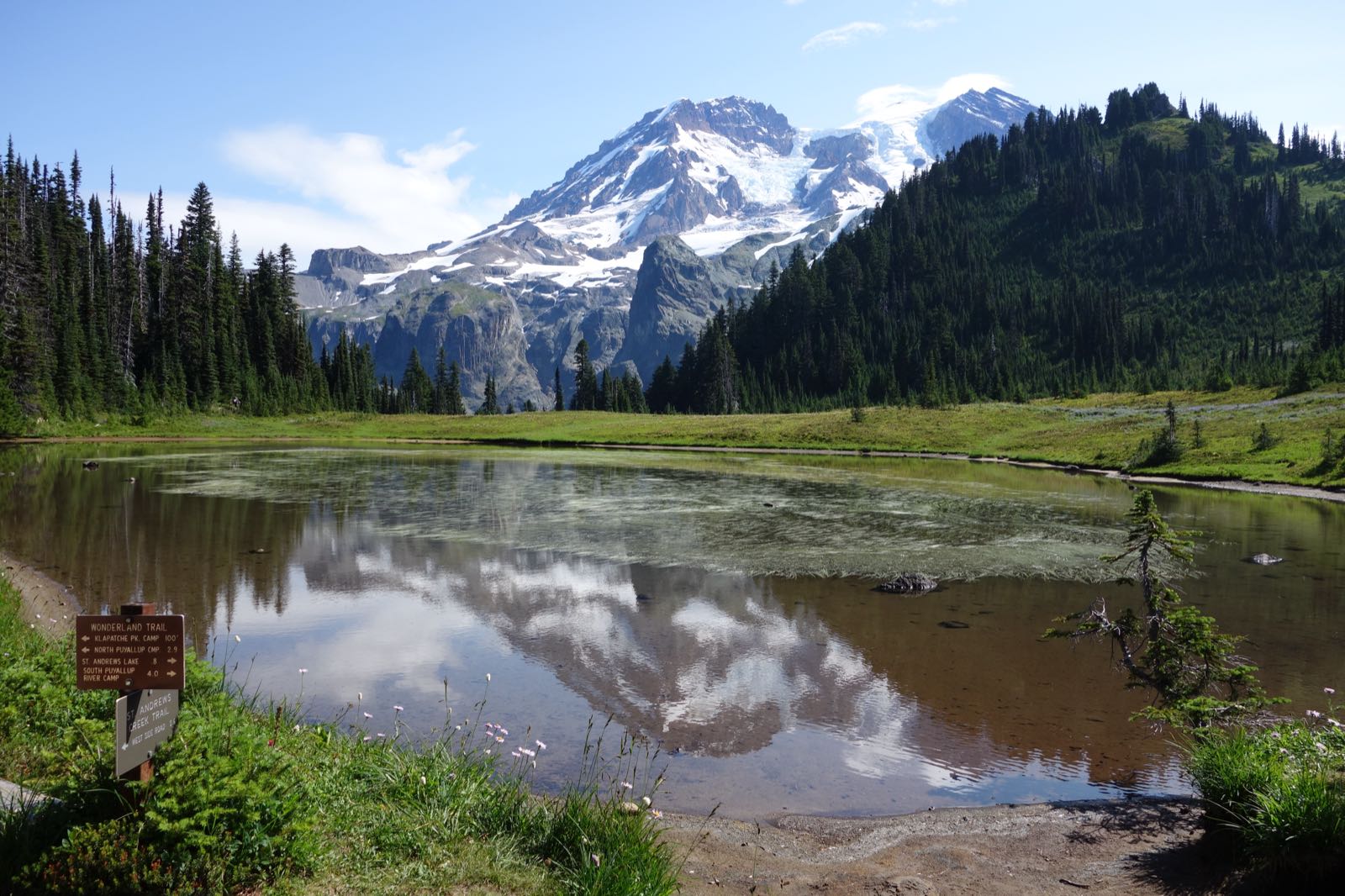
The Wonderland Trail passes through Mountain, Forest, Glacier Viewpoint terrain. Climate conditions include Pacific Northwest, Wet, Unpredictable. The route stays below significant altitude risk, reaching a maximum of 2,073m.
Permits and Logistics
A permit is required for this trek. Check current requirements and costs with your country's embassy or a local trekking agency before departure — regulations and fees change regularly. Porters are not typically available on this route — you carry your own gear.
Use the Trekax Pack Calculator to compare your packed and worn gear weights for the Wonderland Trail using the moderate packing profile at 12% of body weight.
Is this trek right for you?
The Wonderland Trail is about 93 miles (150 km) around Mount Rainier. NPS calls it strenuous, with about 27,000 feet of elevation gain and the same again in loss, through lowland forest and into high alpine and subalpine areas. NPS also says the biggest aspect of planning is knowing your own hiking skills, abilities and habits. It can be hiked as a full loop or in sections, and portions can be done as day hikes, so you do not need to commit to the whole circuit. This is a general guide, not an assessment of your fitness.
Before you go
A wilderness permit is required for all overnight camping in the park, and NPS strongly recommends a reservation in summer. Hikers on the complete trail can camp only in designated camps (18 trailside wilderness camps and 3 non-wilderness camps). Camp only at the site named on your permit for that night, for a maximum of four consecutive nights in any one camp. In summer, party size is limited to 5 at trailside camps.
Plan around snow. The trail is typically mostly snow-free from mid-July to October. In an average snow year NPS says it is not advisable to hike it before mid- to late July, because anything earlier requires winter travel skills such as navigation, ice-axe self-arrest and fording dangerous glaciated rivers.
To shorten the trip, hike a section or day-hike part of the loop. If you do the whole route, NPS says you can cache food and fuel at several locations along it during the summer.
Hang your food from the bear poles at camp. In some sub-alpine areas without tall trees, NPS highly recommends a bear-proof canister. Boil or otherwise treat all water. Fires are not permitted in the backcountry, but white gas, iso-butane cartridge and alcohol stoves are okay.
Based on the terrain, climate, accommodation type, and altitude profile, these are the most important gear decisions for this route:
Waterproof Hiking Boots
Technical terrain requires ankle support and grip
Gore-Tex Waterproof Jacket
High precipitation expected — waterproof essential
Fleece Mid Layer
Evenings and cool mornings
Sleeping Bag -5°C to -10°C Comfort Essential
Self-supported camping requires warm sleep system
Trekking Poles Optional
Reduce knee stress on long descents
Tent or other shelter Essential
Camping is in designated camps with marked sites; NPS lists emergency shelter among its Ten Essentials.
Stove and fuel Essential
Fires are not permitted in the backcountry. White gas, iso-butane cartridge and alcohol stoves are okay; bio-fuel stoves are not.
Bear canister Recommended
Camps have poles for hanging food. NPS highly recommends a canister in sub-alpine areas without tall trees.
Snow-travel gear and skills (early season) Depends on conditions
Before mid- to late July in an average snow year NPS says you need winter travel skills, including ice-axe self-arrest.
What Not to Bring
Packing for the Wonderland Trail
Complete gear checklist for this 150 km, 10–14 days, Demanding route. Best months: Jul, Aug, Sep. Packing profile: Moderate (12% of body weight target).
📋 About This Packing List
This list is generated from the Wonderland Trail's terrain profile (Mountain, Forest, Glacier Viewpoint), climate (Pacific Northwest, Wet, Unpredictable), and accommodation type (Camping). It reflects the moderate packing profile — appropriate for this route's conditions. Product options are listed for every category. Check the retailer for current prices and availability.
Before you start buying: use the Trekax Pack Calculator to explore a total carried-gear target, including worn items. The Wonderland Trail uses the 12% packing profile as a planning guide.
🥾 Footwear
Item
Product Option
Alternative / Notes
Waterproof hiking boots with ankle support and stiff sole
The Wonderland Trail typically takes 10–14 days to complete, covering 150 km with 8,230m of elevation gain.
Is a permit required for the Wonderland Trail?
Yes, a permit is required for the Wonderland Trail. Requirements and costs change regularly — confirm current rules with your embassy or a local trekking agency before departure.
When is the best time to trek the Wonderland Trail?
The best months for the Wonderland Trail are Jul, Aug, Sep, during the Summer season window.
Do I need a guide for the Wonderland Trail?
A guide is not mandatory for the Wonderland Trail, though you should be comfortable with independent route-finding.
What is the altitude risk on the Wonderland Trail?
The Wonderland Trail stays below significant altitude risk, reaching a maximum of 2,073m.
Are porters available on the Wonderland Trail?
Porters are not typically available on the Wonderland Trail — you carry your own gear.