Trek Overview
Location
Terrain and Conditions
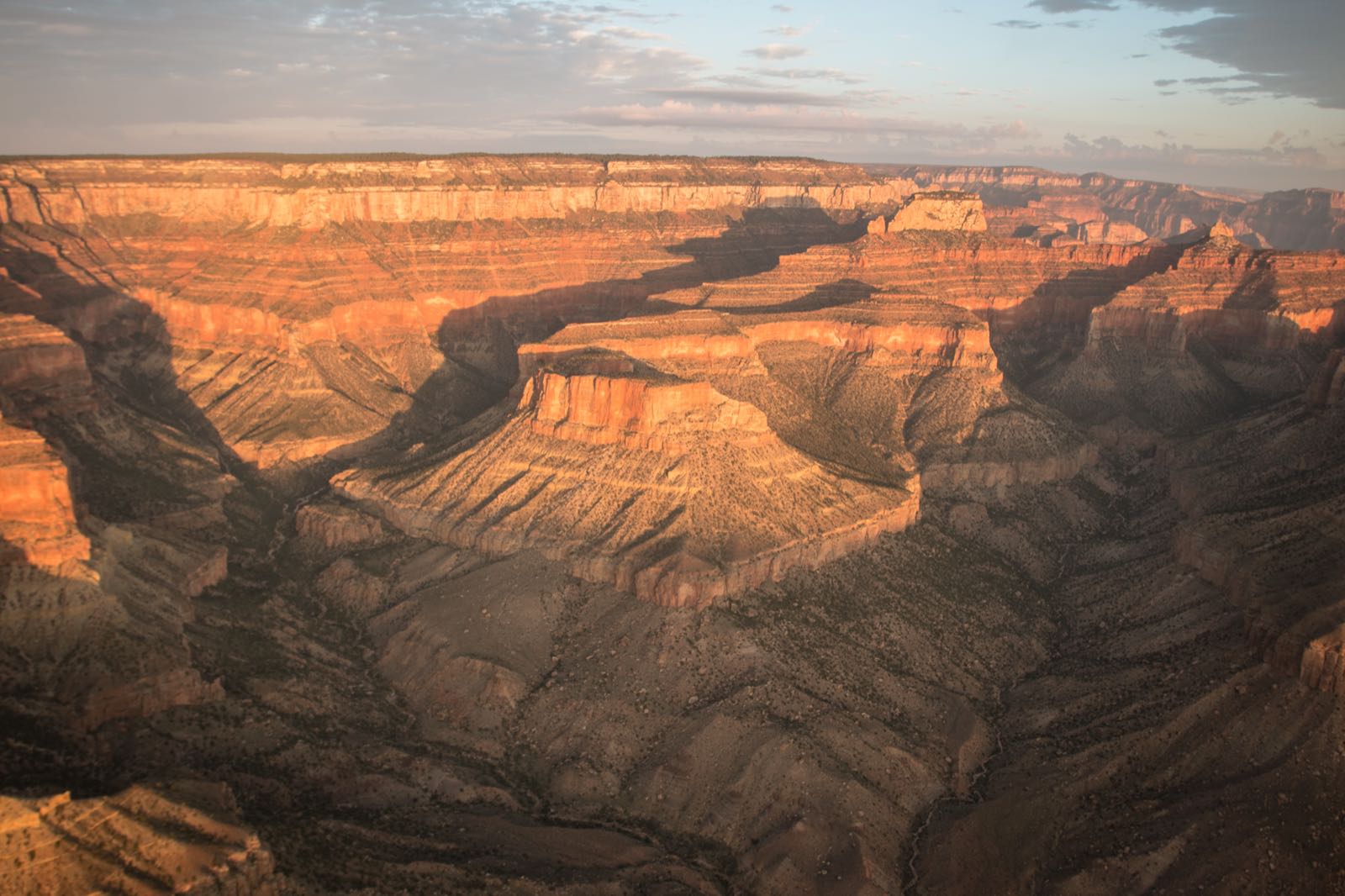
The Grand Canyon Rim to Rim passes through Canyon, Desert, Rocky terrain. Climate conditions include Desert, Extreme Heat, Cold Rim. The route stays below significant altitude risk, reaching a maximum of 2,512m.
Permits and Logistics
Day hikes do not require a backcountry permit. Get a permit before camping overnight in the canyon. See the National Park Service permit rules for reservations and group requirements. Porters are not typically available on this route — you carry your own gear.
Use the Trekax Pack Calculator to compare your packed and worn gear weights for the Grand Canyon Rim to Rim using the moderate packing profile at 12% of body weight.
Is this trek right for you?
NPS warns that there are no easy trails into or out of the Grand Canyon, and that more than 300 people are rescued from the canyon each year. The North Kaibab Trail round trip to the Colorado River is 28 miles with a descent of almost 6,000 ft. NPS says not to attempt rim to river and back in one day, especially between May and September, when extreme heat can quickly become life-threatening. Overnight stays in the canyon let you split the crossing over several days. For hikers without previous Grand Canyon experience NPS recommends the Corridor zone, which has maintained trails, emergency phones and ranger stations. This is a general guide, not an assessment of your fitness.
Before you go
- A backcountry permit is required for overnight camping in the canyon, but not for day hikes. Corridor campgrounds (Havasupai Gardens, Bright Angel, Cottonwood) are normally limited to two nights per campground per hike, with an off-season exception from November 15 to February 28 that allows up to four nights in the Corridor. NPS handles overnight reservations through Recreation.gov. A Phantom Ranch bunk or cabin does not use a backcountry permit and is booked with the park lodges.
- Check current trail, campground and water status with the National Park Service before booking or setting out. The seasonal guidance on this page applies when the route is open.
- Plan your water around the current NPS status, which can change suddenly because of breaks in the waterline. NPS advises carrying enough water for your trip and a reliable way to treat water from natural sources, even on the corridor trails. Seasonal water at trailheads and rest houses is not guaranteed.
- Corridor campsites have a picnic table, a pack pole and a metal food storage can, and all food, toiletries and plastics must go inside the can. An organized non-commercial group of 12 to 30 doing a rim-to-rim hike needs a Special Use Permit from NPS.
Sources checked 2026-10-16: NPS Grand Canyon: Backcountry permit, NPS Grand Canyon: Day hiking, NPS Grand Canyon: Backcountry trails and use areas, NPS Grand Canyon: Key hiking messages (current closures and water).
Priority Gear for the Grand Canyon Rim to Rim
Based on the terrain, climate, accommodation type, and altitude profile, these are the most important gear decisions for this route:
What Not to Bring
- Crampons or ice axe
- Technical climbing harness or ropes
Packing for the Grand Canyon Rim to Rim
Rim-to-rim route closed. Use this packing list only for future planning.
Complete gear checklist for this 35 km, 3–5 days, Demanding route. Typical months when open: Mar, Apr, May, Sep, Oct, Nov. Packing profile: Moderate (12% of body weight target).
Before you start buying: use the Trekax Pack Calculator to explore a total carried-gear target, including worn items. The Grand Canyon Rim to Rim uses the 12% packing profile as a planning guide.
🥾 Footwear
🎒 Pack & Carry
🧥 Clothing
😴 Sleep System
💊 Health & Safety
📱 Tech & Documents
Compare your total carried gear weight, including worn items, with a packing-profile target and a category-by-category weight budget.
Try the Trekax Pack Calculator →Also Useful
Frequently Asked Questions
How long does the Grand Canyon Rim to Rim take?
The Grand Canyon Rim to Rim typically takes 3–5 days to complete, covering 35 km with 2,700m of elevation gain.
Is a permit required for the Grand Canyon Rim to Rim?
Day hikes do not require a backcountry permit. Overnight camping in the canyon does. Phantom Ranch lodging uses a separate reservation, and organized groups may need a Special Use Permit. Current trail closures still apply.
When is the best time to trek the Grand Canyon Rim to Rim?
The North Kaibab Trail is closed from the North Kaibab Trailhead to Phantom Ranch. The National Park Service has not announced a reopening date. When the full route is open, the usual hiking months are Mar, Apr, May, Sep, Oct, Nov.
Do I need a guide for the Grand Canyon Rim to Rim?
A guide is not mandatory for the Grand Canyon Rim to Rim, though you should be comfortable with independent route-finding.
What is the altitude risk on the Grand Canyon Rim to Rim?
The Grand Canyon Rim to Rim stays below significant altitude risk, reaching a maximum of 2,512m.
Are porters available on the Grand Canyon Rim to Rim?
Porters are not typically available on the Grand Canyon Rim to Rim — you carry your own gear.